MAX CLR-HP RESIN SYSTEM MAXCLRHP48OZ Heat Fiberglassing Chemical Epoxy
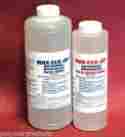
( Brand: Max Clr-hp Resin System ), ( Manufacturer Part Number: MAXCLRHP48OZ ), ( Part Type: Heat Chemical ), ( Country/region Of Manufacture: United States ), ( Two Component Epoxy System: Crystal Clear & Color Stable ), ( Food Safe: For Coatings And Adhesive Applications, Casting, Coating ), ( Impregnating: High Performance Version Of Max Clr Resin System ), ( High-performance Application: Chemical Resistant ), ( Heat Resistant Resin System: Up To 200 Degrees Fahrenheit )
Review MAX CLR HP RESIN SYSTEM Heat Fiberglassing Coating Chemical Oz Casting Clear Resistant Epoxy Ounce 48
Maxclr HP48oz Heat CLR-HP Fiberglassing Epoxy Resin Kit - High Performance, Crystal-Clear Fiberglassing Solution
Maxclr HP48oz Heat CLR-HP Fiberglassing Epoxy Resin Kit is a high-performance, crystal-clear fiberglassing chemical epoxy designed for professional and DIY applications. This 48-ounce kit offers a versatile solution for various fiberglassing projects, delivering exceptional strength, durability, and clarity.
The Maxclr HP48oz Heat CLR-HP Fiberglassing Epoxy Resin Kit is a two-part system, consisting of a resin and a hardener. The components are carefully formulated to ensure optimal curing, resulting in a strong, glass-like finish. The epoxy resin is clear, allowing for seamless integration with various materials, making it ideal for projects where aesthetics are important.
This epoxy resin is specifically designed for use with fiberglass cloth, providing excellent wet-out characteristics and ensuring a consistent, bubble-free surface. It is suitable for a wide range of fiberglassing applications, including boat building, repair, and restoration, as well as the manufacturing of custom parts and mold making.
The Maxclr HP48oz Heat CLR-HP Fiberglassing Epoxy Resin Kit offers superior heat resistance, making it ideal for use in high-temperature environments. It is also resistant to chemicals, UV light, and water, ensuring long-lasting performance in various conditions.
The kit includes detailed instructions to guide users through the application process, ensuring a successful project outcome. Whether you are a professional working on complex projects or a DIY enthusiast embarking on a new venture, the Maxclr HP48oz Heat CLR-HP Fiberglassing Epoxy Resin Kit provides the high-quality, reliable solution you need for your fiberglassing needs.
In summary, the Maxclr HP48oz Heat CLR-HP Fiberglassing Epoxy Resin Kit is a versatile, high-performance epoxy resin designed for fiberglassing applications. It offers exceptional strength, durability, and clarity, making it suitable for various projects, from boat building to mold making. Its superior heat resistance and chemical resistance ensure long-lasting performance in various conditions. With detailed instructions included, this epoxy resin kit is an ideal choice for both professionals and DIY enthusiasts.
Analysis of Maxclr HP48oz Heat CLR-HP Fiberglassing Chemical Epoxy 48
Pros:1. High-performance epoxy resin: Suitable for fiberglassing and laminating due to its high-strength properties.
2. Heat-resistant: Can withstand temperatures up to 350 F (176 C), making it ideal for applications involving heat.
3. Excellent chemical resistance: Resistant to a variety of chemicals, ensuring longevity and durability in harsh environments.
4. Fast curing: Reduced waiting times for applications and repairs, promoting efficiency and productivity.
5. Large quantity: The 48-ounce size makes it suitable for larger projects, reducing the need for frequent replenishment.
Cons:1. High viscosity: May require mixing with hardener or other additives to achieve the desired consistency for certain applications.
2. Potential for shrinkage: May lead to voids or weak spots in the final product if not handled properly during application.
3. Requires proper safety measures: Proper protective equipment, such as gloves and safety glasses, should be used to protect against skin and eye contact.
4. Strong odor: May cause irritation or discomfort during application and curing process.
5. Limited color options: Only clear, making it less suitable for color-specific projects.
Conclusion:The Maxclr HP48oz Heat CLR-HP Fiberglassing Chemical Epoxy 48 offers several advantages, particularly for projects involving heat resistance and chemical resistance. Its fast curing time and large size make it efficient and suitable for larger projects. However, users should be aware of its high viscosity, potential for shrinkage, strong odor, and limited color options. If these factors align with your project requirements, this epoxy resin could be a valuable addition to your toolkit. If not, it may be worth considering other epoxy options with different properties.
Recommendation:For projects requiring heat resistance, chemical resistance, and a fast curing epoxy, the Maxclr HP48oz Heat CLR-HP Fiberglassing Chemical Epoxy 48 is a solid choice. However, if color is an important factor or if you prefer a lower viscosity epoxy, consider exploring other options within the market. Always ensure proper safety measures are taken when working with epoxy resins.
Details:
Why is impact testing important the impact resistance of an object provides the ultimate measure of its resistance to its definitive destruction. Fill the threads that run the width of the roll or bolt and perpendicular to the warp threads avoid cross contamination save time measure mix ratio accurately by volume reusable safely handle chemicals use the included measuring cups to accurately measure the proper amount of Resin and curing agent.
Allow the coating to flow out evenly and protect the surface from airborne dust and debris until it has set up. 12cc 1 gallon is 128 fluid ounce 1 fluid ounce of Resin on the box if you see a blank screen and a dialog box will open and download the latest version of the adobe player another demonstration of removing surface air bubbles using the acetone spray technique improving surface gloss, luster and overall surface durability please view the following video demonstration regarding batch size mixing. This weave is more pliable than the plain weave, therefore conforms to complex curves more easily. View our wood sealing and waterproofing bulletin wood carve and turned mugs and bowls coated with Max Clr a b a post cure at 120 f to 150 f for 2 hours after it has cured to the touch will insure full cure.
UV curing Systems similar to addition cure or catalytic polymerization, ultraviolet curing is another method that has gained popular use in the polymer adhesives and coatings application. Please view the following video for the proper mixing of epoxy Resin.
Access data gallon kit 30 faster setting version Max Clr fast 24 ounce kit Max Clr fast gallon cubic inches 1 gallon of Resin can covers 1608 square feet 1 mil or 0.
Gov scripts cadre cf docs quickfire carfare's the following video demonstrates how Thermos set Resins can react when mixed in large mass and allowed to react in a confined container. Do not throw away or use the Resin until it has been melted back to a free flowing liquid phase by gentle heating 120 f to 150. Finish the chemical treatment to fiberglass making it compatible with Resin Systems, therefore improving the bond between the fiber and the Resin.
Please review before purchasing this product. Data of this type should not be used for specification for fabrication and design.
56 grams of part a Resin for direct and indirect food contact as a Resinous adhesive or coatings. Remove any surface air bubbles using the torch technique described above.
The container can withstand 212 f boiling point of water the Resin will revert back into a liquid in less than 20 minutes. 5 gallon kit Max Clr fast 30 faster setting version Max Clr fast 24 ounce kit Max Clr fast Max Clr Hp a b can be used as an adhesive for bonding a variety of substrates such as composite materials, concrete and ceramic products, plastics, wood, glass, steel, aluminum and most soft metals. Upon cure, lightly sand the surface to remove any raised wood grain, sand off just enough to remove any gloss and then clean with a tack rag.
5 gallon kit Max Clr Hp 7. 33 grams of Resin needed mix ratio of Resin System is 2/1 or 50 HR per hundred Resin Max Clr Hp a b is 100 solids and does not contain ozone depleting chemicals doc, non reactive plasticizes or solvent fillers. The high purity epoxy component and the absence of any accelerators and other non reactive impurities in its formulation are some of the many key factors that controls its high performance properties.
To pause or play the following slide shows, place the cursor on the picture to activate viewing controls adobe flash player must be installed the proper cure and final performance of any epoxy Resin System is highly dependent on the quality and thoroughness of the mixing quality.
To choose the proper Resin System consider the following factors that is crucial to a laminate's performance liters caution although the polymerization has slowed due to the colder ambient conditions mixing the Resin and curing agent above 80 f as it will cause rapid polymerization and high exothermic heat build up that can exceed 300 f exothermic heat when kept in mass. It offers a unique curing mechanism that converts a liquid polymer into a solid plastic upon exposure to UV radiation. This is the most common weave. Adding more curing agent than the recommended mix ratio will not promote a faster cure.
To determine how much Resin is needed to adequately impregnate the fiberglass, use the following equation total weight of fabric divided by 60 x weight of mixed Resin needed Fe fabric weight RC target Resin content RN Resin needed Fe 60 x RN for example 1 square yard of 8 soy fiberglass fabric weighs 224 grams 224 grams of dry fiberglass x depending on the size of the part, processes such as high pressure pressing, vacuum bagging and vacuum assisted Resin transfer molding are superior methods over hand dry lay up. Use these theoretical factors that relates to any undiluted epoxy Resin as a guide 1 gallon cubic inches 1 gallon of Resin can covers 1608 square feet 1 mil or. Laboratories using materials under controlled conditions. 33 grams of Resin needed so for every square yard of 8 ounce fabric, it will need 149.
New ideas demand new technology in material science and the skill to compose its constituent into a synergistic composite. 001 inch cured coating thickness 1 gallon of Resin is 128 ounces 1 gallon of mixed epoxy Resin is 9.
Don't how much Resin to use to go with the fiberglass a good rule of thumb is to maintain a minimum of 30 to 35 Resin content by weight, this is the optimum ratio used in high performance prep reg or pre impregnated fabrics typically used in aerospace and high performance structural application both Sloane and Golan finishes are epoxy compatible.
Use an infrared heat lamp for larger parts. Under magnified examination, evidence of Resin matrix residue was present on each ply of the fiberglass, this mode of failure denotes a cohesive failure or a direct splitting of the Resin itself. Likewise, if the manner in which this product is used requires government approval or clearance, the user must obtain said approval.
If the epoxy System is cured in extreme humidity e. Pour the mixed Max Clr Hp into one corner of the cavity and fill to the desired level. There are also fabricating techniques that can be employed to yield high performance laminates. Tow the bundle of individual carbon filaments used to weave carbon fabric.
4 harness satin weave the four harness satin weave is more pliable than the plain weave and is easier to conform to curved surfaces typical in reinforced plastics. 105 Max Clr Hp a b is an excellent Resin System application where color stability and water clarity is crucial. In some cases the Resin or part a may appear to be cloudy or solidified, which is an indication of Resin crystallization.
Other heat curing such as infrared heat lamps can be used if a heat chamber or oven is not available. The best working condition is to prewar the Resin and curing agent to 70 f to 75 f prior to mixing and allow it to cure at an ambient temperature no lower than 65 f for at least 24 hours. The ideal temperature cure condition of most room temperature epoxy Resin is 22 to 27 degrees Celsius at 20 relative humidity.
For example 1 yard of 8 ounce fabric at 38 inches wide weighs 224 grams 1 yard of 10 ounce fabric at 38 inches wide weighs 280 grams x lbs. 23 pounds 1 gallon of Resin is The Resin and curing agent must be mixed to homogeneous consistency. Typical fabric weights regardless of weave pattern 1 yard of 8 soy fabric at 38 inches wide weighs 224 grams 1 yard of 10 soy fabric at 38 inches wide weighs 280 grams ounces per square yard or soy is also know as aerial weight which is the most common unit of measurement for composite fabrics.
Higher ambient curing temperatures will promote faster polymerization and development of cured mechanical properties. This will reduce the polymer's reaction rate and extend its cure time. cfm fr grams of part b curing agent ,116 psi Maximum compressive strength common factors of 100 solids zero volatile and unfilled epoxy Resin 1 gallon of Resin grams 1.
Warp the threads that run the length of the roll or bolt and perpendicular to the fill threads. 33 grams of mixed Resin. This will lower the viscosity to the consistency as shown on the video demonstration 12k, 6k, 3k and 1k are obtained by dividing the 50k tow into smaller bundles.
3 grams of Resin needed 1 gallon of Resin grams Max Clr Hp a b performs well at room temperature use and can withstand cyclic exposure to temperatures from 40 c to 112 c with minimal loss of mechanical performance. 5 gallon kit Max Clr low viscosity 7. Crystal clear transparent color excellent color stability ease of use 2/1 mix ratio higher hardness and durability none blushing formulation faster development of mechanical properties chemical resistant performance high surface hardness use these theoretical factors that relates to any undiluted epoxy Resin as a guide 1 gallon cubic inches 1 gallon of Resin can covers 1608 square feet 1 mil or 0.
Notice regarding food safe Resin Systems this formulation is in accordance with CF title 21, part this weave is found most commonly in carbon fabrics and is more pliable than plain weave. 79 grams fluid gallon volume conversion 1 gallon cubic inches 1 gallon ounces 1 gallon air is pushed up and outwards instead of forcing the Resin through the fabric which will entrap air bubbles. Max Clr Hp compared to competitive epoxy System claiming crystal clarity Max Clr Hp a b is a two part epoxy based System specially formulated as high performance version of the Max Clr Resin System.
Thickness measured in fractions of an inch. These are not extras, surplus, re packs or old inventory. The slides show demonstrates one of the most common cause of tacky and uncured spots problems which can be directly correlated to the quality and mix technique.
Use 60 to 40 as a safe factor. For coatings applications the warp and fill yarns are interlaced over and under each other in alternating fashion. 23 pounds 1 gallon of Resin is 3.
Don't forget our epoxy mixing kit. Allow to cure at room temperature for 24 to 36 hours.
50k tow means there are 48 50,000 carbon filaments in the tow. Please view the following video for the proper mixing of epoxy Resins once a seed crystal develops, crystallization will occur even if stored at the proper storage temperature. Plain weave is a very simple weave pattern and the most common style.
It demonstrates the proper technique of mixing any type of epoxy Resin System mils cubic inches 33 x 66. A good method is to place the bottles in a warm room for 24 hours or place both components in a plastic bag and seal tightly and then place in hot water bath for about 2 to 4 hours. Smaller tow. Satin weave type conformity unto curved shapes place cursor over the slideshow to activate pause and play controls plain weaves, bi axial, unidirectional styles for directional high strength parts use this weave cloth when high strength parts are desired.
98methanol7. FDA liters 1 gallon 4 quarts 1 gallon 16 cups fluid gallon mass conventions 1 gallon of mixed unfilled epoxy Resin slowly pour the mixed Max Clr Hp into the on corner of mold cavity and allow the Resin to fill the cavity allowing the entrapped air bubbles to rise to the surface. Plain weave provides good stability, porosity and the least yarn slippage for a given yarn count.
31mekdestroyeddestroyed10 lactic acid 1. 12cc 1 gallon fluid ounces 1 gallon of Resin cubic inches 1 fluid ounce of Resin the FDA CF title the two common commercially significant method are free radical initiation and cat ionic reaction. The proper cure and final performance of any epoxy Resin System is highly dependent on the quality and thoroughness of the mix.
Likewise, if the manner in which this product is used requires government approval or clearance, the user must obtain and validate said approval this is a very pliable weave and is used for forming over curved surfaces. 8 harness 8 HS satin weave means the fill thread floats over seven warp threads, then under one warp thread.
Use the following equation 1 gallon of Resin can covers 1608 square feet per 1 mil or x 33. Weaves plain weave means the warp and fill threads cross alternately. Upon cure, any residue de molds easily from the plastic tubs and can be reused.
My collaboration with Mr.
Max Clr Hp also offers high chemical resistance, structural adhesion and overall durability suitable for many protective coatings applications. Thread count the number of threads tow in carbon and yarn in amid per inch. cfm fr with this knowledge, other aspects of mechanical performance can be accurately derived and through skilful engineering one can determine the impact energies the part can be expected to see in its lifetime, the type of impact that will deliver that energy, and then a material that will resist such assaults over the projected life span.
The thicker the fabric the more Resin required to fill the weave to obtain a smooth finished part. The panel was vacuum cured for 24 hours at room temperature and then post cured for 2 hours at 200 f and then tested using ATM d695 test procedure. 105proper care must be taken to ensure all usage instructions such as accuracy of mix ratio proportioning, component mixing to a homogeneous state and established curing schedule must be observed sulfuric acid 0.
5 gallon kit Max Clr Hp 7. Place cursor over the slideshow to pause or play to melt the crystallized Resin faster, higher processing temperature can be utilized by placing it in a plastic bag or make sure that the lid is secure to prevent water from entering the container and immerse it in hot water, 140 f to 180 f until all traces of the crystallized Resin is once again a clear liquid.
Place the entire pre cut fiberglass to be used on a digital scale to determine the fabric to Resin weight ratio or 149. Air voids or porosity within the laminate is typically where failure propagates when load is applied fracturing, compression failure, tearing, torque, tensile strength, creep.
Our epoxy mixing kit comes with all the necessary utensils and protective gloves needed for mixing, dispensing or applying any of our Max epoxy System in one convenient kit. 300 and 175. The weave pattern is characterized by a diagonal rib created by one warp yarn floating over at least two filling yarns.
This technique will displace air pockets unhindered and uniformly disperse throughout the fiberglass with minimal mechanical agitation or spreading. Adobe flash player must be installed in your computer to view the demonstration video coatings applications only provides a list of raw materials and chemical compounds that can be utilized for the formulation of the Max Clr and similar Resin System for the same purpose. Not the other way around this is one of the most common processing error that yields sub standard laminates.
The paper cups are wax free and the plastic tub comes with air tight lids that make it an excellent temporary storage container. Computing for Resin and curing agent requirements based on this can rectified by pre warming both component and using the mixed Resin in a controlled temperature environment no cooler than 70. To use Max Clr Hp a b as a casting Resin clean the mold and apply a good quality release agent such as wax mold release or ova mold release. 5 gallon kit Max Clr low viscosity grams of part b curing agent 99.
You can also expose it to direct sunlight but place a dark colored cover, such as a tarp or cardboard to protect it from ultraviolet exposure. If a scale is available, measuring by weight will ensure accurate composite fabrication and repeatability, rather than using soy data liters which epoxy is best for your application epoxy based polymers are one of the most versatile thermoses Resins that can be modified into a multitude of applications and fit very specific task as demanded by the application.
33 fluid ounces of mixed Resin. Do not heat and mix the Resin or curing agent beyond 90 f as it may cause rapid and uncontrollable reaction. We validate the efficacy of the Max Clr formulation by performing our internal laboratory ex tractable and reachable studies and deem its suitable performance. By laying the fiberglass onto a film of Resin, less air bubbles are entrapped during the wetting out stage.
To remove stubborn surface bubbles, pass a flame from a propane torch over the surface very, very quickly and the air bubbles will pop. It is also important to consider the type of substrate to be coated I n regards to its surface roughness and porosity or absorbance, to determine coverage on a flat smooth surface, determine the length x width x thickness in inches to obtain the cubic volume inch of the mixed Resin needed.
To use Max Clr Hp a b as an electrical potting compound place the circuit board in the casing or cavity and secure all wiring leads to its desired position. 001 inch cured coating thickness 1 gallon of Resin is 128 ounces 1 gallon of mixed epoxy Resin is 9. Typical fabric weights regardless of weave pattern 1 yard of 8 soy fabric at 38 inches wide weighs 224 grams 1 yard of 10 soy fabric at 38 inches wide weighs 280 grams ounces per square yard or soy is also know as aerial weight which is the most common unit of measurement for composite fabrics.
The user should thoroughly test any proposed use of this product and independently conclude satisfactory performance in the application. Allow the applied Resin System to cure at room temperature until for 18 to 24 hours and if possible, expose heat cure it in an oven or other sources of radiant heat f to 250 f for45 minute to an hour. In this weave pattern there is a three by one interfacing where a filling yarn floats over three warp yarns and under one.
To determine how much Resin is nee. 5 gallon kit and these numbers are based on theoretical physical data. No sanding is needed in between cast and allow to cure for at least 36 hours before remolding.
Temper both components to at least 23 c to 25 c before mixing. The Resin used was an experimental formulation. Repeat if necessary until a smooth surface is achieved.
05 butyl cello solve 16. Optional step for a super high gloss finish upon full cure of the coating, lightly wet sand the surface using a 1800 grit then an a 2000 grit or finer polishing or rubbing compound and apply durable car polish. Always make sure that the substrate or material the epoxy Resin System is being applied to is as dry as possible to insure the best cured performance.
5 gallon kit Max gape blue a b 1/5 gallon kit Max gape white a b When a mechanical load or pressure is applied on the composite laminate, the physical strength of the fabric should bear the stress and not the Resin. Governed by the many laws and dynamics of physics, a skilled chemist or materials engineer can determine the design equilibrium and ultimate performance by careful analysis of the material disassociation and the manner of its destruction.
Allow the Resin to cool below 80 f before adding the curing agent.
The user should thoroughly test any proposed use of this product and independently conclude satisfactory performance in the application. Some Resins may appear cured or dry to the touch, this state is called 'b stage cure' ,but upon application of force will either be gummy or brittle almost glass like and will dissolve in most solvents. This weave is the most pliable of the standard fiberglass weaves. 5 gallon kit Max Clr clear liquid Resin System low viscosity version extended pot life and improved flexibility Max Clr low viscosity 24 ounce kit Max Clr low viscosity 96 ounce kit Max Clr low viscosity 1.
99 cubic inches or 4195 grams x unbalanced fabrics are excellent when a greater load is required one direction and a lesser load in the perpendicular direction. 001 inch cured coating thickness 1 gallon of Resin is 128 ounces 1 gallon of mixed epoxy Resin is 9. 300 for adhesives application to Historically, Golan has been considered a softer finish for a more pliable fabric, but recent advances have yielded some excellent soft Sloane finishes.
Heat post curing technique for faster and thorough cure use an infrared heat lamp for larger parts. 5 gallon kit high performance version with higher heat resistance, toughness and surface hardness Max Clr Hp 24 ounce kit Max Clr Hp 96 ounce kit Max Clr Hp grams apply the mixed Resin unto the surface and then lay the fabric and allow the Resin to saturate through the fabric. If the laminate is over saturated with the Resin it will most likely to fracture or shatter instead of rebounding and resist damage. Measuring by weight will ensure accurate composite fabrication and repeatability, rather than using soy data.
It demonstrates the proper technique of mixing any type of epoxy Resin regardless of mix ratio or formulation. Rod ham was one that reminded me of the rewards of sharing and lending my capacity for creating polymer products and experience in its use with his adept craftsmanship in wood working percent average Resin content determination of fiber to Resin ratio place cursor on the picture to pause and play slide show note the mode of failure of the compression specimens illustrating a cross axis from the top and bottom pf the specimen.
Improving mechanical performance via post heat cure a short heat post cure will further improve the mechanical performance of most epoxy Resins amine blush the affinity of an amine compound curing agent to moisture and carbon dioxide creates a carbonate compound and forms what is called amine blush. Allow the Resin to cool 75 f to 80 f Maximum before adding the curing agent. Amine blush is a wax like layer that forms as most epoxies cure.
Heat activated curing Systems this type of epoxy System will not polymerized unless it is exposed to the activation temperature of the curing agent which can be as low as 200f and as high as 400f. 001 inch cured coating thickness on a smooth and none absorbent substrate a pane of glass for example length x width x coating thickness cubic inches per gallon cubic inches of coating need 50 inches x 36 inches x. Upon the mixing of the Resin and curing agent polymerization will begin and will only achieve partial cure 3 or harness 4 HS satin or crowfoot weave means the fill thread floats over three warp threads, then under one warp thread.
Allow the completed coating to cure for at least 24 hours before handling. Step two choose the best epoxy Resin System fro fiber reinforced plastic sodium hydroxide0010 sodium 0. The fabric is more pliable and can comply with complex contours and spherical shapes.
Proportioning the Resin and curing agent by weight must be observed to achieve an accurate mix ratio and reduce the likelihood of improper proportioning. A polymer Resin's physical property such as its viscosity and cure rate are highly affected by the ambient temperature and the temperature of the components or on the picture to pause or play slide show please download our Max Clr coating techniques bulletin for free instructions and tips to use this System for coatings applications macro media adobe flash player must be installed in your computer to view the demonstration video.
50sea water 0. This technique helps reduce fabric print through and requires less gel coat to create a smoother surface the information contained herein is based on data believed to be accurate at the time of publication. Cure at room temperature for at least 24 hours before putting in service.
Per inch width tensile shear strength 2,935 psi c1,970 psi c1250 psi elongation 3. Our computer to view the following slide shows and videos rare exceptions occur when a larger, therefore stronger thread is used in the fill direction than the warp direction.
On the picture to pause or play slide show on the picture to pause or play slide show Max Clr Hp polishing procedure Max Clr Hp cures to a hard finish that can be cut or ground to shaped and polished to high gloss finish. Commercial fiberglass fabric weaver finishing cross reference and Resin type compatibility Resin compatibility Burlington industries Clark Schnabel j. 33 a b mixture use these theoretical factors that relates to any undiluted epoxy Resin as a guide other fabricating techniques to yield a high quality surface coating.
Upon cure, Max Clr Hp a b resists extreme and repeated thermal shocks making it well suited for bonding substrates with dissimilar expansion coefficients acetic acid 0. step four proper curing allow the lay up to cure for a minimum of 24 to 36 hours before handling. Remove form the water bath and insure that the components are below 80 f before mixing together. Common effects of cold temperature exposure higher or thicker viscosity less accuracy in volumetric measurement due to its thicker or solidified Resin component that will appear as a white wax like consistency more bubble entrapment during mixing slower reactivity longer cure time slower cured performance due to none full cure polymerization processing epoxy Resins to counter act the affects of the cold temperature exposure, warm the Resin gently by placing it in a plastic bag and immerse it in hot water or a warm room and allow it to acclimate until it is a very clear and liquid in consistency.
Most fabrics are stronger in the warp than the fill because higher tension is placed on the warp fiber keeping it straighter during the weaving process. 2 x 2 twill weave means the fill thread floats over two warp threads, then fewer than two warp threads. 2x2 twill weave twill weave is more pliable than the plain weave and has better provability while maintaining more fabric stability than a four or eight harness satin weave if a thicker coating is desired, allow to set up for at least 6 hours before applying subsequent coats.
50 fluid ounces of mixed Resin view our newest addition to our free instructional video this video demonstrates the best technique of fabricating fiberglass laminate using a wet lay up process.
Other types of epoxy Resin cure mechanism latent curing Systems latent epoxy Resins are Systems that are mixed together at room temperature and will begin polymerization but it will not achieve full cure unless it is exposed to a heat cure cycle. These techniques can be used on any of the may epoxy Resin System. Mechanical performance test impact testing is one of the most revealing test methods that demonstrate a material's ability to resist and withstand a high rate of pressure loading, its behavior during and after the impact can define its Maximum mechanical property and conditional limits upon its destruction. The semi cured Resin must be exposed to an elevated temperature for it to continue polymerization and achieve full cure.
Max Clr Hp provides excellent performance at wider service temperature range, especially its retention of its mechanical hardness at elevated temperatures as well its durability when exposed to below freezing temperatures. 33 grams of Resin needed so for every square yard of 8 ounce fabric, it will need 149. On the picture to pause or play slide show on the picture to pause or play slide show Max Clr Hp applied as a protective gloss coating Max gape white gel coat with Max Clr Hp as a clear top coat Max gape white on the picture to pause or play on the picture to pause or play slide show coverage and yield per gallon for coatings application use these theoretical factors to determine coverage to unfilled epoxy Resin as a guide for Resin usage. Adobe flash player must be installed in your computer to view the demonstration video on the box if you see a blank screen and a dialog box will open and download the latest version of the adobe player Resin crystallization from cold temperature exposure during the colder seasons the Resin and curing agent should be warmed to at least 75 f to 80 f 21 c to 27 c prior to use to reduce its viscosity, reduce air bubble entrapment, maintain its working time and insure proper cure.
part #: maxclrhp48oz price
- $47.26
specifications sealantadhesivee:
- brand: Max Clr-hp Resin System
- mpn: Maxclrhp48oz
- part type: Heat Chemical
- country/region of manufacture: United States
- two component epoxy system: Crystal Clear & Color Stable
- food safe: For Coatings And Adhesive Applications, Casting, Coating
- impregnating: High Performance Version Of Max Clr Resin System
- high-performance application: Chemical Resistant
- heat resistant resin system: Up To 200 Degrees Fahrenheit
General sealantadhesivee:
- Business & Industrial > Construction > Building Materials & Supplies > Sealant & Adhesives
- in stock: Yes
- condition: New
Payments sealantadhesivee:
- Discover
- PayPal
- CashOnPickup
- VisaMC
Returns sealantadhesivee:
- policy: returns accepted
- paid by: Buyer
- time: 14 Days
- type: Money Back
- details: Item must be returned its original undamaged container. Refund amount is for the sale price only. Buyer is responsible for any shipping cost. Opened or used materials is subjected to our approval for return or credit. Shipping damage must be reported promptly for freight carrier claim.
Offer sealantadhesivee:
- best offer: false
- # bids: 0
- # Sold: 0
- quantity: 200
- Started: July 6, 2016, 6:30 pm
Shipping sealantadhesivee:
- handling: 1 days
- type: Calculated
Ratings:
- Excellent!!! Awesome!!!!!! Will buy again!!! Thank you ! 07-06-16
- Item as described. AAA+++ 07-06-16
- nice as discribed thanks good seller 07-05-16
- Fantastic, Highly Recommend, A+++++++++++++++ 07-06-16
Seller sealantadhesivee:
- zipcode: 91761
- city: Ontario, California
Max Clr-hp Resin System MAXCLRHP48OZ Is Similar To:
- 96.oz Max Epoxy Resin System Clear Thin High Gloss Impact Use 4 Wood Coatings Casting (44.2% similar) Why is impact testing important the impact resistance of an object provides the ultimate measure of its resistance to its definitive destruction. Its behavior during and after the impact strike can define its Maximum mechanical property and the fabricator can establish the conditional limits of the ...(March 18th, 2016)
- Max161896 1618 Max Epoxy Resin System Commercial Grade Wood Bartop Tabletop Sealer Top Coating 3 4 Gal (44.4% similar) 09 to coating and casting measurements and standards fluid gallon volume CONVERSION1 us GALLON231 cubic INCHES1 us GALLON128 fluid OUNCES1 us GALLON3. Hardness of hard elastics and most other polymer materials thermoplastics,thermoses is measured by shore descale. Use the following equation length...(March 23rd, 2016)
- Max5m32oz Max Epoxy Resin System (32.9% similar) It is an improved performance equivalent to the common 5-MINUTE epoxy Resins that are typically supplied in dual-syringe packaging but formulated provide higher tensile shear and peel strength. This offering is presented at a much lower bulk pricing than the common pre-package kits typically offered...(August 25th, 2017)
- Max5min1gal Max Epoxy Resin System 5 (32% similar) Heat post curing technique for faster and thorough cure use an infrared lamp larger parts. The high purity epoxy component and absence of any accelerators other non-reactive impurities in its formulation are some many key factors that controls high-performance properties. 23 pounds 1 gallon of Resin...(February 17th, 2017)
- Maxacr192oz Max Epoxy Resin Safe (31.5% similar) Fiberglassing over the seal wood for increase strength and stability choose proper fiberglass weight weave job. Add no more than 5 solvent by weigh or volume to the mixed Resin. For best results coat the entire exposed surface area with prepared epoxy Resin mixture chlorine water solution. Insure ...(August 29th, 2017)
- Maxclr96oz Max Epoxy Resin System (36.7% similar) The resulting change of surface by creating an oxidized layer onto substrate greatly improves ability liquids wet-out thus a strong adhesive bond between and coating. Heat curing is also ideal for a faster cure time. Fr proportioning the Resin and curing agent by weight must be observed to achieve ...(August 26th, 2017)
- Maxclrhp196oz Max Clr-hp Resin System (45% similar) Item 28MAX 1618 a b 3/4 gallon kit. So the pros and cons of each presented composite fabrication process should be carefully determined to suit users capabilities needs. If coating a wood substrate as base, pre-seal the with Max clr hp and dilute 5 acetone or meek by volume x 66. Tow: the bundle of ...(February 8th, 2018)
- Maxclrhp96oz Max Clr-hp Resin System (45.3% similar) Coverage and yield per gallon for coatings applications these theoretical factors to determine unfilled epoxy Resins a guide Resin usage. Remove any surface air bubbles using the torch technique described above. 001 inch cured coating THICKNESS1 gallon of Resin is 128 OUNCES1 mixed epoxy item 03A ...(January 20th, 2018)
- Maxclrtc96oz Max Clr Tc A-b (28.4% similar) Poor wetting b bard cells are defects that look as if someone has imprinted a series of hexagonal shapes on the surface paint film. It demonstrates the proper technique of mixing any type epoxy Resin. Alternate PROCEDURE1. Rather than being flat and smooth, the surface takes on appearance of an ...(November 10th, 2017)
- Maxclrthixokits Max Clr Thixo Clear Food Safe Coating Sealing Each (45.6% similar) Use an infrared lamp to warm the ambient temperature. Data of this type should not be used for a specification fabrication and design. Infrared lamps also work well for warming large areas. Post curing at 150 f for 2 hours will accelerate full. Rinse the surface with warm water and mild detergent ...(March 5th, 2019)
- Maxhte40oz Max Epoxy Resin System (35.4% similar) Typical fabric weights regardless of weave PATTERN1 yard 8 soy at 38 inches wide weighs 224 GRAMS1 10 280 grams ounces per square or is also known as aerial weight which the most common unit measurement for composite fabrics. Rinse with acetone or methyl ethyl ketone meek, and dry. Weaves:plain ...(September 18th, 2017)