SPRAYING SYSTEMS MFG CP3612-TEF Caulks Sealants
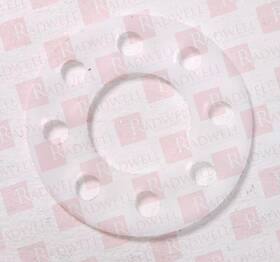
( Brand: Spraying Systems Mfg ), ( Manufacturer Part Number: CP3612-TEF )
Review SPRAYING SYSTEMS MFG Cp3612tef New
The **Spraying Systems Co. CP3612-TEF** is a high-performance, full-cone, air atomizing spray nozzle designed for precision fluid application in industrial, agricultural, and commercial settings. Engineered with advanced hydraulic principles, this nozzle delivers an exceptionally uniform, fine mist pattern with a consistent droplet size distribution, making it ideal for tasks requiring meticulous coverage and minimal overspray. The **CP3612-TEF** features a **36-inch (914 mm) full cone spray pattern**, providing a wide, even distribution over a broad area while maintaining excellent penetration and wetting efficiency. Its **TEF (Teflon -coated) internal components** ensure superior resistance to corrosion, chemical degradation, and wear, extending the nozzle s operational lifespan even in harsh environments where exposure to acids, solvents, or abrasive fluids is common. The nozzle operates on a **pressure range of 10 to 100 psi (0.7 to 6.9 bar)**, allowing for versatile adjustment to accommodate varying fluid viscosities and application demands, from light misting to more robust spraying needs. Its **threaded -inch NPT inlet** and **standard -inch NPT outlet** facilitate easy integration into existing piping systems, while the **quick-connect design** simplifies installation and maintenance. The CP3612-TEF is particularly well-suited for applications such as **agricultural pesticide and fertilizer distribution, industrial cleaning systems, cooling towers, fire protection systems, and precision coating processes**, where consistent, high-quality spray performance is critical. Built with durability in mind, this nozzle combines **high-flow efficiency with low energy consumption**, reducing operational costs while maximizing productivity. Whether used in large-scale agricultural operations, manufacturing plants, or specialized cleaning systems, the CP3612-TEF delivers reliable, high-precision spraying with minimal maintenance, making it a versatile and cost-effective choice for professionals demanding excellence in fluid application technology.
### **Pros and Cons of Buying Spray-On Manufacturing CP3612-TEF (or CP3612TEF)**
The **CP3612-TEF** (or **CP3612TEF**) is a type of **spray-on, conductive, carbon-based ink** commonly used in flexible electronics, sensors, and printed circuit applications. Below is a detailed breakdown of its advantages and disadvantages.
---
### **Pros of Using CP3612-TEF**
1. **High Conductivity**
- The material offers relatively high electrical conductivity (typically in the range of **10 100 S/cm**), making it suitable for applications requiring functional electronic traces.
- Better conductivity than many other carbon-based inks, reducing resistance losses in printed circuits.
2. **Flexibility and Bendability**
- Since it is applied as a thin film, it can be used on **flexible substrates** (e.g., PET, PI, or even textiles), enabling wearable electronics and stretchable devices.
- Resists cracking under repeated bending, unlike rigid metal traces.
3. **Easy Application via Spray Coating**
- Can be **spray-deposited** for uniform, large-area coverage, which is faster than screen printing or inkjet methods for certain applications.
- Allows for **complex geometries** (e.g., 3D surfaces) that may be difficult with other deposition techniques.
4. **Low Temperature Processing**
- Often **cures at relatively low temperatures (below 150 C)**, making it compatible with heat-sensitive substrates like plastics and polymers.
- Reduces energy costs compared to high-temperature sintering processes.
5. **Chemical and Environmental Stability**
- Generally resistant to **oxidation and moisture** under normal conditions, improving long-term reliability.
- Can be used in **humid or outdoor environments** (though performance may degrade over time in extreme conditions).
6. **Cost-Effective for Large-Area Deposition**
- Spray coating can be **scalable for mass production**, reducing per-unit costs for large batches.
- No need for expensive stencils or masks compared to photolithography.
7. **Compatibility with Various Substrates**
- Works on **non-conductive materials** (e.g., plastics, ceramics, glass) without requiring additional adhesion layers in many cases.
- Can be combined with other printed materials (e.g., dielectrics, sensors) in hybrid circuits.
8. **Potential for Custom Formulations**
- Some manufacturers allow **tuning of viscosity, conductivity, or adhesion** by adjusting binders or additives, making it adaptable to specific needs.
---
### **Cons of Using CP3612-TEF**
1. **Lower Conductivity Than Metals**
- While better than many carbon inks, its conductivity is still **far lower than copper or silver** (typically **10 100 S/cm vs. 10 S/cm for metals**).
- May result in **higher resistive losses** in high-current applications, limiting its use in power electronics.
2. **Inconsistent Performance Across Batches**
- Conductivity and adhesion can **vary between batches** due to formulation inconsistencies, requiring strict quality control.
- Sensitivity to **storage conditions** (e.g., moisture, temperature) can affect shelf life and performance.
3. **Limited Mechanical Durability**
- While flexible, **prolonged bending or abrasion** can degrade conductivity over time, especially in harsh environments.
- Not as robust as **evaporated metals or thick-film pastes** for high-stress applications.
4. **Adhesion Issues on Certain Substrates**
- May **peel or delaminate** if not properly pre-treated (e.g., plasma cleaning, adhesion promoters) or if the substrate is smooth (e.g., untreated PET).
- Requires **optimized surface preparation** for reliable bonding.
5. **Environmental and Health Concerns**
- Some formulations contain **solvents or nanoparticles** that may pose **toxic or flammable risks** during application.
- Proper **ventilation and safety measures** are necessary during spray coating.
- Disposal of waste ink may require **special handling** due to potential carbon-based residues.
6. **Limited Temperature Resistance**
- While low-temperature processing is an advantage, **high-temperature applications (>200 C)** may cause degradation.
- Not suitable for **high-power or high-heat environments** where metals would be preferred.
7. **Complex Optimization for Specific Applications**
- Requires **trial and error** to achieve optimal thickness, conductivity, and adhesion for new substrates or designs.
- May need **post-processing steps** (e.g., curing, encapsulation) to improve reliability.
8. **Competition from Alternative Materials**
- **Silver nanowire inks** or **graphene-based inks** may offer **higher conductivity** for certain applications.
- **Conductive polymers** (e.g., PEDOT:PSS) can provide **better flexibility** but often at the cost of conductivity.
- **Traditional metal deposition (evaporation, sputtering)** remains the gold standard for high-performance electronics.
9. **Potential for Drying/Application Defects**
- **Uneven spray deposition** can lead to **incomplete coverage or bridging issues**, requiring careful control of nozzle distance, pressure, and substrate movement.
- **Dust or contaminants** in the environment can interfere with adhesion and conductivity.
10. **Limited Commercial Availability & Support**
- Some specialized formulations may be **hard to source** compared to more common materials like silver paste.
- **Technical support and documentation** may be less extensive than for established metal-based processes.
---
### **Conclusion**
The **CP3612-TEF spray-on conductive ink** is a **versatile, flexible, and cost-effective solution** for **low-to-moderate conductivity applications** where traditional metals are impractical due to substrate constraints. It excels in **wearable electronics, sensors, RFID tags, and flexible circuits** where flexibility and ease of deposition are critical.
However, its **lower conductivity, potential adhesion issues, and environmental considerations** make it **less suitable for high-performance power electronics, high-temperature applications, or situations requiring ultra-low resistance**. For these cases, **metal-based solutions (e.g., copper, silver) remain superior**, though at a higher cost and with less flexibility.
If you are working on **prototype development, large-area flexible circuits, or applications where spray coating is advantageous**, CP3612-TEF can be a **good choice with proper optimization**. For **high-reliability, high-conductivity needs**, traditional methods should be considered instead.
---
### **Recommendation**
- **Use CP3612-TEF if:**- You need **flexible, spray-deposited conductive traces** on non-rigid substrates.
- Your application requires **moderate conductivity (10 100 S/cm)** and can tolerate some resistance loss.
- You are working with **low-cost, large-area production** where spray coating is efficient.
- The operating environment is **not extremely harsh** (e.g., no high heat, heavy abrasion, or corrosive chemicals).
- **Avoid CP3612-TEF if:**- You require **ultra-low resistance** (e.g., power electronics, high-current paths).
- The application involves **high temperatures (>200 C) or aggressive chemicals**.
- **Metal traces (copper, silver) are feasible** and can meet performance requirements.
- **Adhesion reliability is critical** without additional surface treatments.
- **Alternative Considerations:**- For **higher conductivity**, explore **silver nanowire inks** or **graphene-based conductive films**.
- For **better flexibility**, test **conductive polymers (PEDOT:PSS)** or **carbon nanotube composites**.
- If **precision and high performance** are needed, consider **photolithography with metal deposition**.
Before finalizing, **test small batches** under your specific conditions to verify adhesion, conductivity, and durability. Proper **substrate preparation, controlled spray parameters, and post-curing** will significantly improve results.
Details:
All products are guaranteed to be working but may show signs of use. Call to use a shipping service other than the ones listed. The product is used surplus. Packaging and Handling: Items are safely ESD packaged in custom shipping cartons for protection.
part #: cp3612 prices
- $21.63-$300.00
specifications sealantadhesivee:
- brand: Spraying Systems Mfg
- mpn: Cp3612-tef
shipping sealantadhesivee:
- service: Standard
- transit: 2-5 Days
- type: Fixed
- class: Standard
- cost: $12.90
offer sealantadhesivee:
- quantity: 10
- started: March 12, 2026
- availability: In Stock
- options: Ship-to-home
- sold: 0
payments sealantadhesivee:
- credit card: Discover
- wallet: Google-pay
- other
general sealantadhesivee:
- Adhesives, Sealants Tapes > Caulks, Sealants Removers > Caulks Sealants
- condition: New
seller sealantadhesivee:
- # reviews: 194162
- city: 1 Millennium Dr, Willingboro, NJ 08046
- rating: 99.6%
returns sealantadhesivee:
- policy: Returns Accepted
- method: Money back
- paid by: Buyer
- time: 30 Days