METAL WORK PNEUMATIC 0090400502 Caulks Sealants
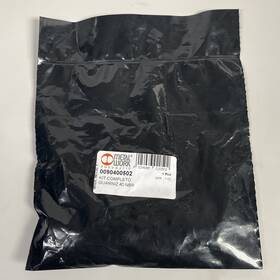
( Brand: Metal Work Pneumatic ), ( Manufacturer Part Number: 0090400502 )
Review METAL WORK PNEUMATIC
The **Pneumatic 0090400502** is a high-performance, double-acting pneumatic cylinder designed for precision industrial applications requiring robust and reliable linear motion. This robust actuator is engineered with a robust steel housing and a sealed, corrosion-resistant design, making it ideal for environments where durability and longevity are critical. The cylinder features a compact yet sturdy construction, ensuring minimal footprint while delivering maximum force output, making it suitable for integration into tight machinery layouts without compromising performance. Its double-acting mechanism allows for controlled extension and retraction, providing bidirectional force for applications such as clamping, positioning, or material handling with exceptional repeatability and accuracy.
The 0090400502 is equipped with a **rod-end mounting system** that ensures secure attachment to various actuators, levers, or grippers, while its **hardened and ground rod** minimizes wear and extends operational life even under heavy loads. The cylinder s **piston rod** is sealed with high-quality elastomers to prevent contamination from entering the internal components, safeguarding against dust, moisture, and debris critical for maintaining consistent performance in harsh industrial settings. Additionally, the integrated **end-of-stroke cushions** on both the rod and cap sides dampen impact forces, reducing mechanical stress and prolonging the cylinder s service life while enhancing operational safety.
This pneumatic cylinder is compatible with standard **compressed air systems**, operating efficiently within a pressure range of 2 to 10 bar (29 to 145 psi), depending on the specific application requirements. Its **quick-disconnect fittings** simplify installation and maintenance, allowing for rapid assembly and disassembly without the need for specialized tools. The 0090400502 is also engineered with **low-friction guides** to ensure smooth, silent operation, reducing energy consumption and minimizing vibration key advantages in automated systems where precision and efficiency are paramount. Whether used in assembly lines, packaging machinery, or material processing equipment, this cylinder delivers consistent, high-speed performance with minimal downtime, making it a versatile choice for manufacturers seeking dependable pneumatic actuation.
### **Pros and Cons of Buying Pneumatic Actuator Model 0090400502**
#### **Pros:**1. **High Reliability and Durability** Pneumatic actuators are known for their robust construction, capable of handling heavy loads and frequent cycling without excessive wear. This model appears to be designed for industrial or commercial applications where reliability is critical.
2. **Fast Operation** Pneumatic systems generally offer rapid response times compared to hydraulic or electric alternatives. This makes them ideal for applications requiring quick positioning, such as valve control, conveyor systems, or automated machinery.
3. **Low Maintenance Requirements** Since pneumatic systems rely on compressed air rather than fluids or electrical components, they are less prone to leaks, corrosion, or electrical failures. This reduces downtime and maintenance costs over the long term.
4. **Safety in Hazardous Environments** Pneumatic actuators are inherently safe in explosive or flammable environments because they do not generate sparks or rely on electrical power. This makes them suitable for industries like chemical processing, food and beverage, or pharmaceuticals.
5. **Scalability and Flexibility** Pneumatic systems can be easily integrated into larger automation setups. The actuator can be paired with various sensors, valves, or controllers, allowing for customizable control schemes.
6. **Energy Efficiency in Short-Cycle Applications** While pneumatic systems consume energy continuously (via compressed air), they are highly efficient for applications with frequent, short-duration operations (e.g., valve toggling). The energy is only used during movement, not holding.
7. **Resistance to Environmental Factors** Many pneumatic actuators are designed to operate in extreme temperatures, dusty, or wet conditions without performance degradation, making them versatile for outdoor or harsh industrial settings.
8. **Cost-Effective for High-Volume Use** Once installed, the operational costs (primarily compressed air) are often lower than those of hydraulic or electric systems over time, especially in large-scale applications.
---
#### **Cons:**1. **Dependence on Compressed Air Supply** Pneumatic systems require a stable and properly maintained air compressor. Power failures, air leaks, or compressor malfunctions can disrupt operations. Backup systems (e.g., accumulators) may be needed for critical applications.
2. **Lower Precision Compared to Electric or Hydraulic** Pneumatic actuators may introduce slight variations in positioning due to factors like air pressure fluctuations, temperature changes, or mechanical play. This can be a drawback in applications requiring precise control (e.g., CNC machinery).
3. **Noise and Vibration** Pneumatic systems can generate noticeable noise and vibration during operation, which may be problematic in noise-sensitive environments (e.g., offices, laboratories, or residential areas). Sound dampening measures may be required.
4. **Limited Holding Force Without Locking Mechanisms** Unlike electric actuators, pneumatic actuators typically do not hold position without continuous air supply. Additional components (e.g., spring returns, magnetic brakes, or mechanical locks) are often needed to maintain position when power is off.
5. **Energy Consumption for Continuous Operation** While efficient for short cycles, pneumatic systems consume energy continuously if the actuator must maintain a position. This can lead to higher operational costs in applications requiring constant holding (e.g., valves in steady-state mode).
6. **Potential for Air Leaks** Hoses, fittings, and seals in pneumatic systems can degrade over time, leading to air leaks. Regular inspections and maintenance are necessary to prevent inefficiencies or system failures.
7. **Limited Torque/Force in Large Systems** While strong for their size, pneumatic actuators may struggle to match the torque or force capabilities of hydraulic actuators in very heavy-duty applications. Oversizing may be required for demanding tasks.
8. **Environmental Impact of Compressed Air Production** The energy required to generate compressed air can contribute to higher carbon emissions, depending on the power source. This may be a consideration in sustainability-focused industries.
---
### **Conclusion**
The **0090400502 pneumatic actuator** is a well-suited choice for applications prioritizing **speed, reliability, and low maintenance** in environments where **compressed air is readily available**. It excels in industries like manufacturing, food processing, or automation where frequent, high-cycle operations are needed, and where safety and durability are critical.
However, if **precision, holding force without power, or quiet operation** are requirements, alternative technologies (e.g., electric or hydraulic actuators) may be more appropriate. Additionally, the **dependency on a stable air supply** and **potential for noise/vibration** should be carefully considered in the application s context.
### **Recommendation**
**Buy this pneumatic actuator if:**- Your application requires **fast, reliable, and low-maintenance actuation** (e.g., valve control, conveyor systems, or automated gates).
- You have a **consistent compressed air supply** and can mitigate noise or vibration concerns.
- The environment is **harsh or hazardous**, and safety is a priority.
- Cost efficiency over time is important due to minimal maintenance needs.
**Avoid or reconsider if:**- **Precision positioning** is critical (electric servo actuators may be better).
- The actuator must **hold position without continuous power** (consider spring-return or electric alternatives).
- **Noise or vibration** is a significant issue (soundproofing or alternative technologies may be needed).
- The application involves **extremely heavy loads** where hydraulic actuators could be more efficient.
**Final Suggestion:**If purchasing, ensure compatibility with your **air compressor system** and **control setup**. Pair it with **proper filtration, pressure regulators, and maintenance protocols** to maximize longevity. For critical applications, consult the manufacturer s specifications and consider adding **backup mechanisms** (e.g., accumulators or mechanical locks) to enhance reliability.
Details:
METAL WORK PNEUMATIC. Condition is New. Shipped with USPS Ground Advantage.
part #: 0090400502 prices
- $7.22-$12.12
specifications sealantadhesivee:
- brand: Metal Work Pneumatic
- mpn: 0090400502
shipping sealantadhesivee:
- cost: $0.00
- transit: 4-11 Days
- type: Fixed
- carrier: USPS
- service: USPS Ground Advantage
- class: Standard
returns sealantadhesivee:
- policy: No Returns
offer sealantadhesivee:
- options: Ship-to-home
- best offers: True
- started: February 10, 2026
- quantity: 4
- availability: In Stock
- sold: 0
payments sealantadhesivee:
- wallet: Apple-pay
- credit card: Visa
- other
general sealantadhesivee:
- condition: New
- Adhesives, Sealants Tapes > Caulks, Sealants Removers > Caulks Sealants
seller sealantadhesivee:
- rating: 99.9%
- # reviews: 1885
- city: Chester, Arkansas
Metal Work Pneumatic 0090400502 Is Similar To:
- 08676 Metal Work Grit Flex Wheel 037495086769 (44.7% similar) Metal Work 60 grit 4 flex wheel 3ZBOX 33...(March 30th, 2019)
- Metal Work Pneumatic 0091250502 Brand New (75.7% similar) Part number. The product is used surplus. Packaging and handling: items are safely eds packaged in custom shipping cartons for protection. Sells new and surplus product develops channels to purchase such. All products are guaranteed to be Working but may show signs of use. Call to use a shipping ...(January 27th, 2025)
- Metal Work Pneumatic 0090400101 Brand New (78.4% similar) All products are guaranteed to be Working but may show signs of use. Part number. Packaging and handling: items are safely eds packaged in custom shipping cartons for protection. Sells new and surplus product develops channels to purchase such. Call to use a shipping service other than the ones ...(September 18th, 2025)
- Metal Work Pneumatic W0951602507 Brand New (69.3% similar) Sells new and surplus product develops channels to purchase such. Packaging and handling: items are safely eds packaged in custom shipping cartons for protection. The product is used surplus. All products are guaranteed to be Working but may show signs of use. Part number call to use a shipping ...(October 27th, 2025)
- Metal Work Pneumatic W0952002101 Brand New (69.3% similar) Part number the product is used surplus. Packaging and handling: items are safely eds packaged in custom shipping cartons for protection. All products are guaranteed to be Working but may show signs of use. Call to use a shipping service other than the ones listed...(November 20th, 2025)
- Metal Work Pneumatic 0091000502 Brand New (81.1% similar) All products are guaranteed to be Working but may show signs of use. Call to use a shipping service other than the ones listed. Packaging and handling: items are safely eds packaged in custom shipping cartons for protection. The product is used surplus. Part number...(March 11th, 2026)